Basic Mechanic: Introduction to Motor Mechanics & Systems
Programme Overview
Introduction to Motor Mechanics & Systems
Master the fundamentals of vehicle operation and maintenance. This course covers everything from the physics that makes an engine move to the advanced diagnostics used to keep modern vehicles on the road. Whether you are aiming for a career in automotive repair, performance tuning, or industrial maintenance, this course provides the essential building blocks.
Core Learning Modules
The Science of Motion & Electricity
1. Understand the physical laws that govern automotive systems.
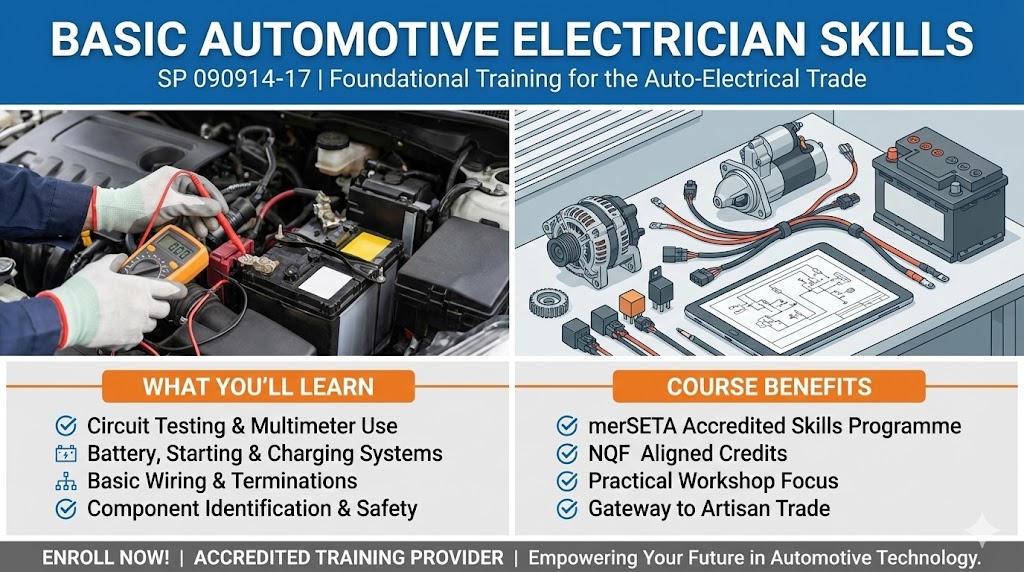
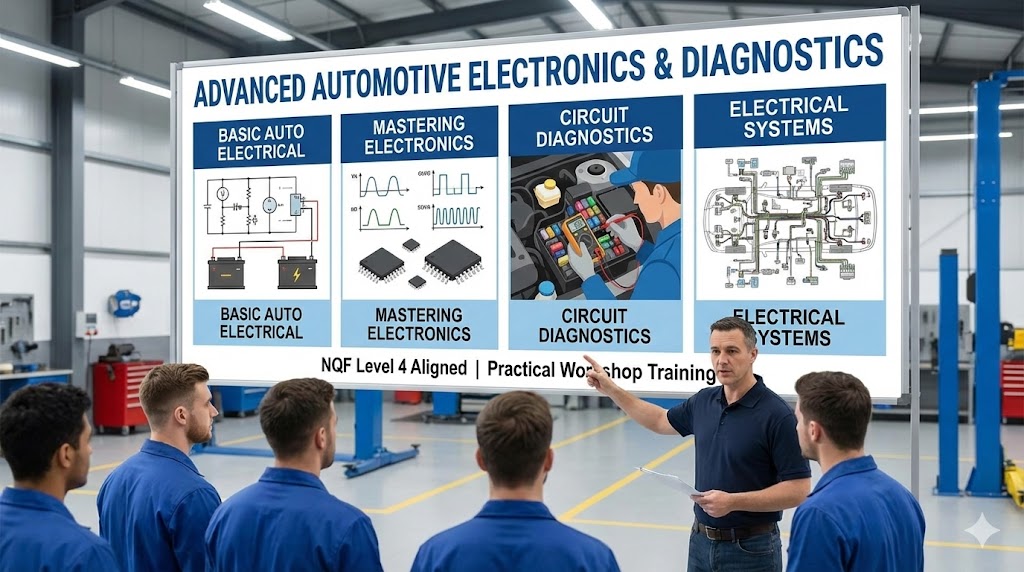
- Electrical Theory: Master Ohm’s Law, Faraday’s Law, and Kirchhoff’s Law to understand vehicle circuitry.
- Physics of Power: Explore Torque vs. Horsepower, Newton’s Laws of Motion, Friction, and Aerodynamics.
- Induction: How alternators use magnetic fields to recharge batteries.
2. Engine Architecture & Performance
-Engine Types: Comparing Petrol (EFI/Carbureted) vs. Diesel engines and specialized Boxer engine configurations.
- Forced Induction: The purpose and maintenance of Turbochargers.
- Exhaust & Emissions: Understanding catalytic converters and noise reduction systems.
3. Critical Vehicle Systems
- Braking Systems: From standard hydraulic disc brakes to heavy-duty Air Brake systems.
- Suspension & Steering: Maintenance of shock absorbers, control arms, and the importance of wheel alignment.
- Transmission: Comparing Manual, CVT (Continuously Variable), and Dual-Clutch systems.
- HVAC: Understanding the blower motor and compressor in climate control.
4. Preventative Maintenance & Diagnostics
The art of longevity and troubleshooting.
- Routine Services: Oil changes, filter replacements (oil, fuel, air), and tyre rotation/balancing.
- Advanced Troubleshooting: Using OBD-II scanners and systematic approaches to identify faults.
- Fluid Management: Correct procedures for coolant, brake fluid, and power steering fluid.
5. Metal Fabrication & Welding
- Essential workshop skills for structural repair.
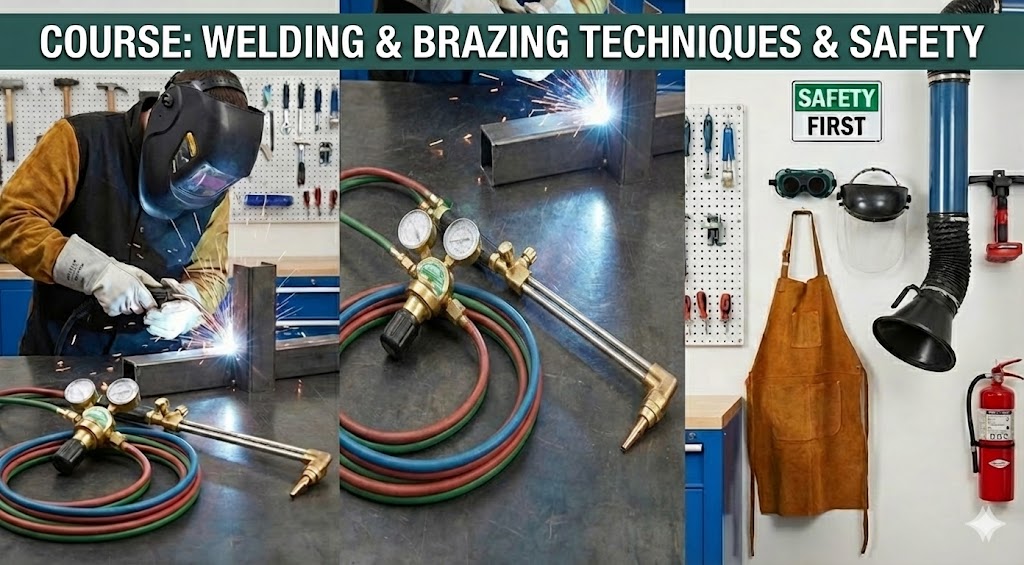
- Techniques: Mastery of SMAW (Stick), GMAW (MIG), FCAW (Flux-cored), and TIG welding.
- Gas Welding: Using fuel gas and oxygen for cutting and joining.
Qualification
Qualification: Foundational for NQF Level 2 & 3 Automotive or Mechanical Engineering.
Career Outcomes
Potential Career Paths:
Legislation: Training includes the Occupational Health and Safety Act (OHS) and standards set by the Department of Employment and Labour.
Career Outcomes
- Junior Mechanic: General vehicle servicing and repair.
- Diagnostic Assistant: Specialized in electronic troubleshooting and OBD-II scanning.
- Specialized Artisan: Path toward becoming a Diesel, Hybrid/Electric, or Performance Tuning specialist.
- Workshop Safety Officer: Managing health and safety protocols in a technical environment.
Interested in this Programme?
Need Help Deciding?
- Free consultation
- merSETA funding support
- Career guidance
- Facility tours available
Related Programmes
You May Also Be Interested In
Fuse and Cut Metals
Automotive Electrical: Automotive Electrical & Electronics Systems